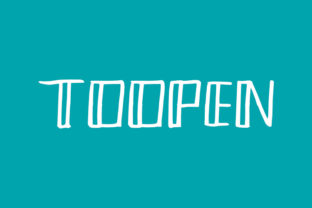
Discover Toopen: A Font That Brings Doodle Art to Life
Toopen is a display font that captures the essence of doodle art with its casual, playful, and handcrafted appearance. Designed to evoke creativity and energy, it’s perfect for those who want to add a unique visual flair to their projects. Whether you're a designer, blogger, marketer, or hobbyist, Toopen can elevate your work with its distinct character.
Why You Should Consider Toopen
Many people are drawn to Toopen because of its ability to convey personality and informality. Unlike traditional serif or sans-serif fonts, Toopen feels more like a sketch on paper—loose, expressive, and approachable. This makes it ideal for branding, social media posts, invitations, and other creative content where a friendly tone is essential.
Its versatility is another key selling point. Toopen works well in both digital and print formats, making it a valuable asset for creators across different mediums. However, choosing a font like Toopen isn’t just about aesthetics—it also involves understanding how it fits into your overall design strategy.
Common Mistakes When Using Toopen
Even though Toopen is visually appealing, there are common pitfalls that users often overlook. One frequent mistake is using it as a primary font without considering readability. While its casual style is great for headings or accents, it may not be suitable for long body text due to its loose structure.
Another mistake is assuming that all fonts labeled as "doodle" or "handwritten" behave similarly. Toopen has its own unique stroke variations and spacing, which means it requires careful pairing with complementary fonts to maintain clarity and balance.
Some users also fail to consider the context in which they’re using Toopen. For example, applying it to formal documents or professional presentations might come off as unprofessional. It’s important to match the font’s vibe with the intended message and audience.
How These Mistakes Affect Your Work
Using Toopen incorrectly can lead to confusion, reduced readability, and a mismatch between the visual style and the content’s purpose. In marketing materials, this could result in a lack of professionalism or miscommunication. In educational settings, it might make text harder to read, especially for those with dyslexia or visual impairments.
Additionally, improper use of Toopen can affect the perceived quality of your work. If the font doesn’t align with the brand identity or the message you’re trying to convey, it can weaken the impact of your design. This is especially true in competitive markets where first impressions matter.
Practical Tips for Using Toopen Effectively
To avoid these issues, start by understanding the limitations and strengths of Toopen. Use it primarily for headings, logos, or decorative elements rather than large blocks of text. Pair it with a clean, readable font for body copy to ensure clarity.
Before finalizing your design, test Toopen in different contexts. How does it look on a mobile screen? Does it maintain its charm when scaled down? Is it legible in black and white? These questions can help you make informed decisions.
Also, consider the target audience. If your audience includes older adults or those with visual challenges, prioritize accessibility by using high-contrast colors and ensuring sufficient spacing between characters.
Realistic Examples of Better Approaches
- Example 1: A small business owner uses Toopen for a website header but pairs it with a modern sans-serif font for the body text. This creates a balance between creativity and readability.
- Example 2: A blogger applies Toopen to a blog post title and a call-to-action button, while keeping the rest of the content in a standard font. This maintains visual interest without overwhelming the reader.
- Example 3: An educator uses Toopen for a classroom poster, combining it with bold, clear typography for instructions. The result is engaging yet easy to follow.
These examples show how Toopen can be used effectively when paired thoughtfully with other fonts and applied in the right context.
What to Check Before Using Toopen
Before deciding to use Toopen, take the time to evaluate several factors:
- Font Licensing: Ensure you have the proper license for commercial use if needed. Some fonts are free for personal use only.
- Font Weight and Style: Check if the version you choose includes all necessary weights and styles (e.g., regular, bold, italic) for your project.
- File Format: Confirm whether the font supports the file types you need, such as OTF, TTF, or WOFF for web use.
- Compatibility: Test the font across different platforms and devices to ensure consistent rendering.
- Accessibility: Review guidelines for inclusive design and consider how the font affects readability for all users.
By carefully evaluating these aspects, you can ensure that Toopen enhances your work without compromising quality or usability.
Final Thoughts on Toopen
Toopen is more than just a font—it's a tool for expression and creativity. Its casual, doodle-inspired design offers a fresh alternative to traditional typefaces, but it requires thoughtful application to achieve the best results. By avoiding common mistakes and following practical tips, you can harness the full potential of Toopen while maintaining clarity, professionalism, and user-friendliness.